Kumano Kohechi (Small Route)
70km pilgrimage route in Japan
Distance
70km
Duration
4 days
Difficulty
Very Challenging
Certification
shuincho
Start → End
Koyasan → Kumano Hongu Taisha
Planning Snapshot
Distance
70km
Typical duration
4 days
Average day
~18km/day
Difficulty
Very Challenging
Best months
May–June, September–October
Lodging density
Low
Resupply
Hard
Access
Nankai Railway to Gokurakubashi then cable car to Koyasan
Is this route a good fit?
Best for
Ultimate spiritual challenge
Time commitment
4 walking days at about 18km/day
Lodging and resupply
Low lodging · Hard resupply
Why use Sacred Trails
Offline stages, waypoint stories, lodging notes, and route context stay available when mobile signal drops.
Rough Distance Planner
Use this as a rough distance sketch before detailed planning: 4 walking days across 70km, averaging about 18km per day. Adjust for real stages, terrain, rest days, weather, opening seasons, and lodging availability before booking.
Daily target
17.5km
Route style
Low lodging · Hard resupply
| Day | Distance | Total | Route / lodging reference | |
|---|---|---|---|---|
| 1 | Walk | 17.5km | 17.5km | Obakotoge Pass |
| 2 | Walk | 17.5km | 35km | Miuratoge Pass |
| 3 | Walk | 17.5km | 52.5km | Hatenashi-toge Pass |
| 4 | Walk | 17.5km | 70km | Kumano Hongu Taisha |
| Total days | 70km | 4 | ||
Distances are averaged. Route markers use the nearest ordered waypoint to each rough segment; lodging references are supporting town data, not recommended overnight stops or confirmed availability.
About the Route
The Kohechi is the most direct route between two of the most sacred sites in Japanese Buddhism and Shinto: the temple complex of Koyasan — the mountain monastery founded by Kobo Daishi (Kukai) in 816 as the headquarters of Shingon Buddhism — and the three Grand Shrines of Kumano. Monks and ascetics began walking this route in the 11th century to unite the profound esoteric Buddhism of Koya with the ancient nature-god spirituality of Kumano, a merging that became known as shinbutsu-shugo, or the harmonious fusion of Buddhism and Shinto. The path is relentlessly demanding: three mountain passes above 1,000 meters, remote mountain villages with no services, and trails that descend and ascend with little respite. What the Kohechi offers in return is perhaps the deepest spiritual atmosphere of any Kumano route — a walk between two sacred worlds, in a landscape so silent it seems to be listening.
Key Waypoints
Koyasan Daimon Gate
0km from start · 820mMain western gate of Koyasan (rebuilt 1705). Entrance to Kobo Daishi's sacred complex founded in 816 CE. Stamp at information center near the gate.
Koyasan Okunoin
2km from start · 850mKobo Daishi's mausoleum. Over 200,000 gravestones line this sacred forest. The great master is believed to be in eternal meditation. Stamp at Okunoin entrance.
Omata
13km from start · 480mFirst lodging village on the Kohechi. Starting point for the climb to Obako-toge Pass. Former forestry settlement. Stamp at village rest area.
Obakotoge Pass
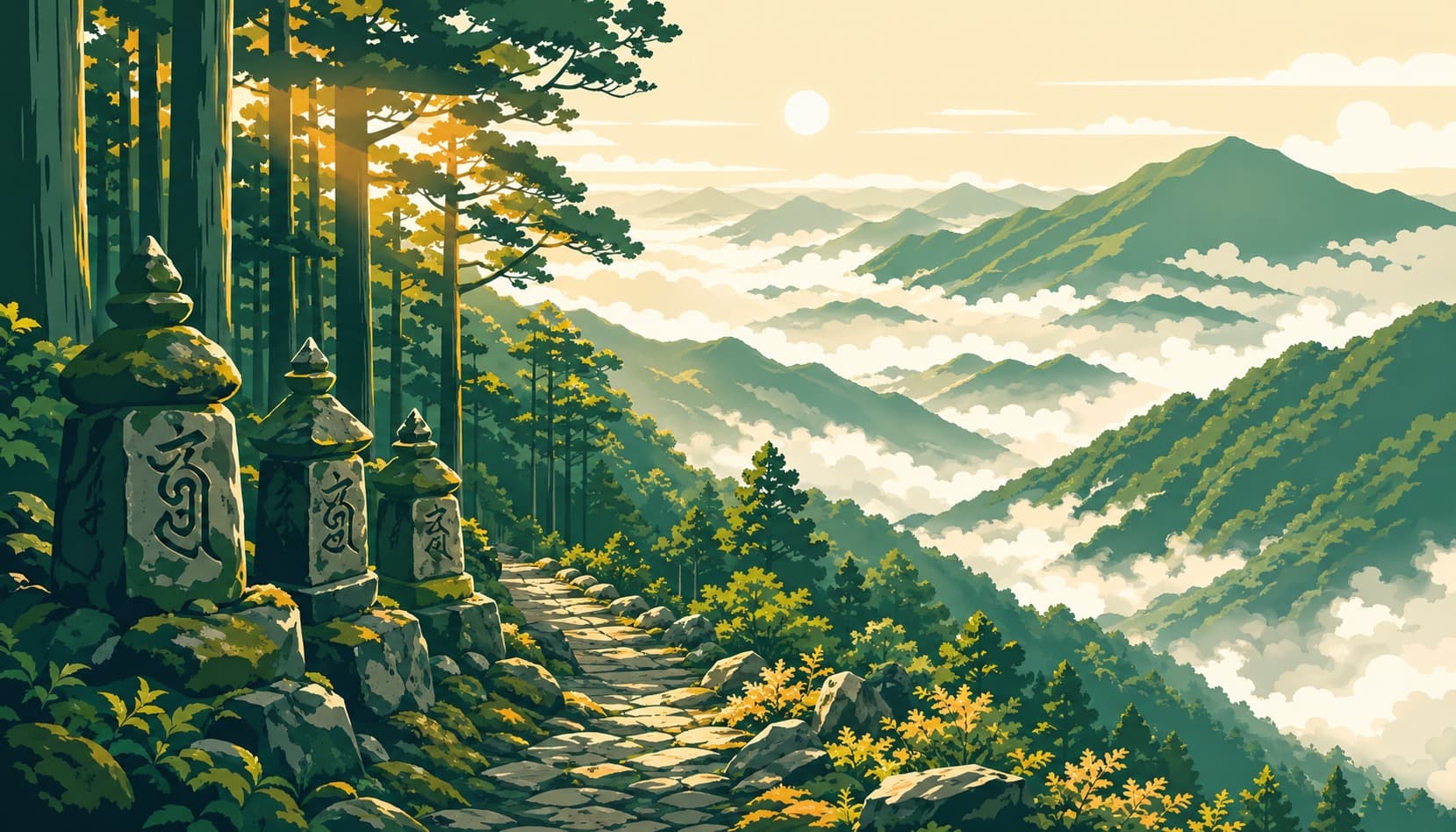
20km from start · 1344mHighest point on the Kohechi route (1,344m). Sea of clouds and panoramic views of the Kii Mountains. On clear days, the Omine range is visible. Stamp at the pass rest area. ⚠️ Steep mountain pass. No water sources for several kilometers. Not recommended for young children.
Miuratoge Pass
33km from start · 1080mMiura Pass at 1,080m elevation. Stone Buddha statues and old tea house ruins line the ancient trail. Once a critical waypoint on the Kumano pilgrimage. Stamp beside the pass marker post. ⚠️ Steep mountain pass. No water sources for several kilometers. Not recommended for young children.
Totsukawa Onsen
48km from start · 230mHot spring in Totsukawa, Japan's largest village by area. Famous natural free-flowing onsen and suspension bridges. Stamp at the onsen information center.
Hatenashi-toge Pass
55km from start · 1114m'Endless Pass' at 1,114m. Jizo Bodhisattva statue stands at the summit. Panoramic views to the Pacific Ocean on clear days. Stamp at the Jizo statue on the pass.
Sangen-chaya Ruins
66km from start · 280mJunction of Nakahechi and Kohechi routes where three tea houses once stood. From here, pilgrims from both paths merged toward Hongu Taisha. Stamp beside the junction marker.
13 waypoints total · Sacred Trails app contains full detail for every waypoint.
Points of Interest
Koyasan Okunoin
· templeSacred cemetery with 200,000 tombstones. Kobo Daishi mausoleum
Koyasan Danjo Garan
· templeSacred temple complex. Konpon Daito pagoda. Free grounds
Koyasan Shukubo (Temple Stay)
· lodgingTemple lodging with shojin ryori (Buddhist cuisine). Book ahead
Omata Village Rest
· teahouseSmall village in Nara. Limited lodging. Day 1 overnight
Miura-guchi Rest Area
· teahouseValley settlement. Minshuku available. Day 2 overnight
Totsukawa Onsen
· onsenMountain hot spring village. Public bath 400 JPY. Day 3 overnight
⚠️ Before You Go
Best avoid
December–March (snow on the Nishi-no-Koya-michi mountain crossing)
Weather risk
Snow Nov–Apr above 1,000 m; typhoon flooding risk June–October
Mobile signal
Essentially no signal for the entire route — bring a dedicated GPS device
Cash
Virtually no ATMs; carry ¥15,000+ for the full route
Note
The most difficult Kumano route — 70 km through mountains with 5,000 m of cumulative elevation; not suitable for first-time pilgrims
Recommended to carry
Navigate the Kumano Kohechi (Small Route) Offline
Stage-by-stage navigation, waypoint history, and lodging data — all offline in Sacred Trails. Free to download with route packs for the trails you walk.