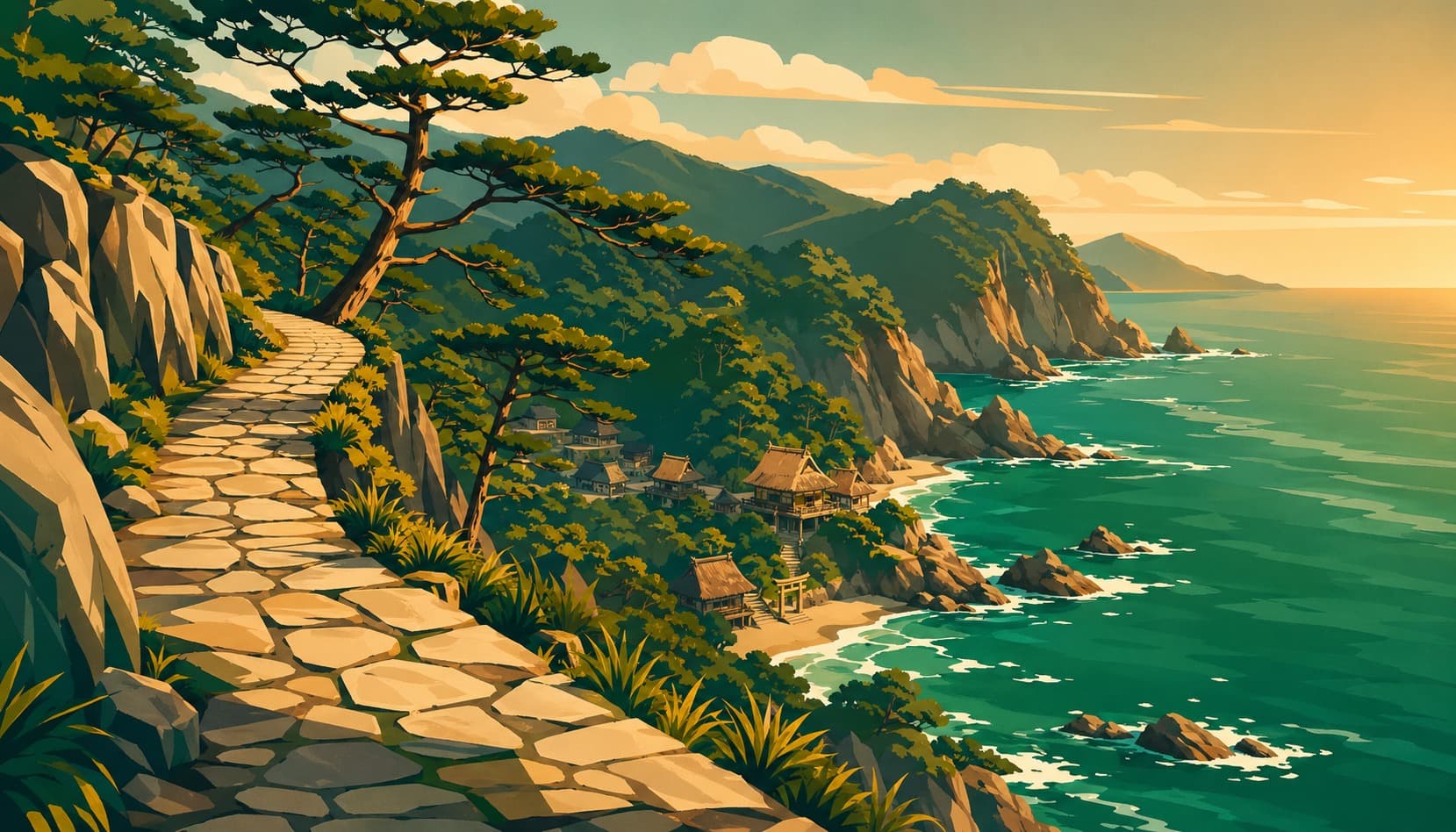
Kumano Iseji (Ise Route)
170km pilgrimage route in Japan
Distance
170km
Duration
7 days
Difficulty
Moderate
Certification
shuincho
Start → End
Ise Grand Shrine → Kumano Hongu Taisha
Planning Snapshot
Distance
170km
Typical duration
7 days
Average day
~24km/day
Difficulty
Moderate
Best months
March–May, October–November
Lodging density
Low
Resupply
Hard
Access
Train to Ise-shi Station (JR Sangu Line or Kintetsu)
Is this route a good fit?
Best for
Sacred Japan history & long trails
Time commitment
7 walking days at about 24km/day
Lodging and resupply
Low lodging · Hard resupply
Why use Sacred Trails
Offline stages, waypoint stories, lodging notes, and route context stay available when mobile signal drops.
Rough Distance Planner
Use this as a rough distance sketch before detailed planning: 7 walking days across 170km, averaging about 24km per day. Adjust for real stages, terrain, rest days, weather, opening seasons, and lodging availability before booking.
Daily target
24.3km
Route style
Low lodging · Hard resupply
| Day | Distance | Total | Route / lodging reference | |
|---|---|---|---|---|
| 1 | Walk | 24.3km | 24.3km | Megitoge Pass |
| 2 | Walk | 24.3km | 48.6km | Misezakatoge Pass |
| 3 | Walk | 24.3km | 72.9km | Magose-toge Pass |
| 4 | Walk | 24.3km | 97.2km | Miki-toge / Hago-toge |
| 5 | Walk | 24.3km | 121.5km | Matsumoto-toge Pass |
| 6 | Walk | 24.3km | 145.8km | Kumano Hayatama Taisha |
| 7 | Walk | 24.2km | 170km | Kumano Hongu Taisha |
| Total days | 170km | 7 | ||
Distances are averaged. Route markers use the nearest ordered waypoint to each rough segment; lodging references are supporting town data, not recommended overnight stops or confirmed availability.
About the Route
The Iseji is the great connector of Japanese sacred geography, linking the two most venerated sites in the Japanese religious world: Ise Jingu, the inner sanctuary of the sun goddess Amaterasu and the spiritual heart of the imperial lineage, and the three Grand Shrines of Kumano. Heian-period pilgrims who had completed their worship at Ise would continue south along this route through the forested ridges of the Kii Peninsula to Kumano, combining both sacred destinations in a single great journey. The path crosses the dramatic Magose Pass, descends through the ancient cedar groves of Tsugizakura Oji, and traces river valleys where the sound of water has accompanied pilgrims for a thousand years. Walking the Iseji today means following the spiritual axis of ancient Japan — a path that connects heaven's highest deity to the wild forest gods of the south, and in doing so, holds the entire archipelago's soul in its two hundred kilometers.
Key Waypoints
Ise Jingu Naiku
0km from start · 20mJapan's holiest site, enshrining Amaterasu. Shikinen Sengu rebuilds the shrine every 20 years. Pilgrims began the Kumano journey here. Stamp beside the approach path at Uji Bridge, Naiku.
Megitoge Pass
22km from start · 310mFirst pass crossing on the Iseji. Legend says the name 'female demon' comes from bandits haunting the pass. Stone-paved path remains. Stamp near the trailhead of Megitoge Pass.
Kii-Nagashima
58km from start · 5mFishing town blessed with a natural harbor on the Kumano-nada. One of the very few places in Japan that still catches ocean sunfish (manbou), a local tradition since the Edo period. Timber floated down the Kitayama River arrived here to be loaded onto coastal ships. Stamp at tourist information center at Kii-Nagashima.
Magose-toge Pass
78km from start · 340mPass with the most beautiful stone pavement remaining on the Iseji. The 2km stone-paved road is breathtaking. Giant Owase cypress trees line the path. Stamp at stone-paved entrance of Magose-toge Pass.
Miki-toge / Hago-toge
98km from start · 300mTwo consecutive passes. Pacific Ocean viewpoint between them. Stone boar walls (inogaki) built to keep wild boars from farmland still remain. Stamp near the rest area at Miki-toge.
Kumano
115km from start · 10mKumano city is famous for Onigajo (World Heritage-listed sea cave rock formations). Gateway to Hana-no-Iwaya Shrine. Shishi-iwa rock nearby. Stamp at tourist office near Kumano Station.
Matsumoto-toge Pass
120km from start · 135mLast pass on the Iseji route. Panoramic view of the long Shichiri-mihama coastline from the top. A life-sized Jizo Bodhisattva statue stands at the pass. Stamp at the Jizo statue on the pass.
Shingu
145km from start · 10mGateway town to Kumano Hayatama Taisha. Where the Kumano River meets the Pacific Ocean. Also known for the legend of Jofuku (Xu Fu), the Chinese explorer. Stamp at Shingu Station tourist office.
20 waypoints total · Sacred Trails app contains full detail for every waypoint.
Points of Interest
Ise Jingu Naiku
· shrineInner Shrine of Ise. Most sacred Shinto site. Free
Ise Jingu Geku
· shrineOuter Shrine of Ise. Starting point for Iseji. Free
Oharai-machi Shopping Street
· foodTraditional street near Naiku. Ise udon, akafuku mochi
Tochihara Rest Area
· teahouseMountain village. End of Day 1. Minshuku available
Ise-Kashiwasaki Area
· foodSmall town with shops. Resupply point. Day 2 end
Magose-toge Pass
· teahouseFamous cobblestone pass. 325m. Beautiful forest trail
⚠️ Before You Go
Best avoid
August (peak typhoon season; extreme humidity)
Weather risk
Typhoon season June–October; steep sections between Owase and Kumano become very slippery
Mobile signal
Interior sections between Owase and Kumano have limited signal
Cash
Rural Mie coast services are primarily cash-only; carry ¥10,000+
Note
The least-walked Kumano route, offering genuine solitude — but the elevation gain on the Mie coast sections is demanding
Recommended to carry
Navigate the Kumano Iseji (Ise Route) Offline
Stage-by-stage navigation, waypoint history, and lodging data — all offline in Sacred Trails. Free to download with route packs for the trails you walk.